
Vermont Closing Delays: The Legal Issues Buyers and Sellers Should Watch For
Real estate closings in Vermont are usually straightforward, but legal issues can unexpectedly slow everything down. Buyers, sellers, and real estate agents often feel pressured by tight moving schedules, rate-lock deadlines, and seasonal market changes. When a legal problem appears late in the process, it can add stress and uncertainty. Understanding the most common issues that cause closing delays in Vermont can help you avoid them and keep your transaction on track.
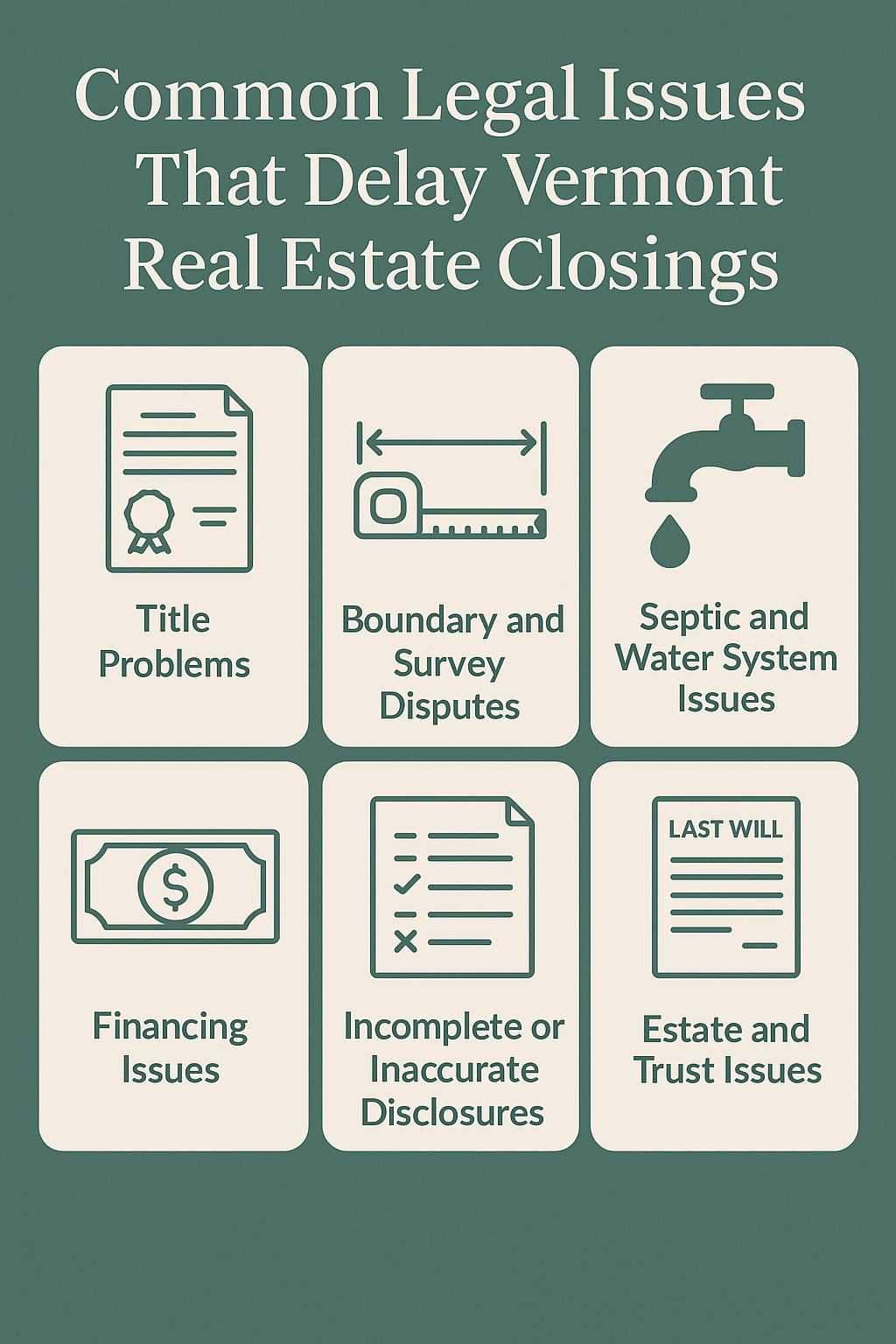
Another factor that slows Vermont closings is incomplete or inaccurate property disclosures. Sellers are required to provide truthful information about water damage, structural issues, environmental concerns, and other material facts. When a buyer discovers something late in the process that was not previously disclosed, negotiations may reopen, inspections may be repeated, and attorneys may need to draft new agreements. All of this takes additional time.
If you are planning to buy or sell property in Vermont and want personalized guidance, our offices in Williston and Hartford are ready to assist. Contact Peet Law Group to make your closing as smooth and predictable as possible. www.peetlaw.com
Title problems are one of the biggest reasons a closing gets pushed back. A title search may reveal an old mortgage that was never properly discharged, liens that a seller didn’t know about, or unexpected rights of way that affect how a property can be used. Vermont also has many older homes and family-owned parcels, which increases the likelihood of handwritten documents, outdated descriptions, or gaps in the chain of ownership. Clearing these issues takes time and must be completed before a buyer can receive clean title.
Boundary and survey disputes are another recurring problem. Vermont property lines can be complicated, especially in rural areas where fences, stone walls, and long-standing assumptions do not always match the official record. If a survey shows a shed, driveway, or septic system on or near a neighboring property, the parties may need to negotiate an easement or revise the deed. Any disagreement between neighbors over land use can stall the closing until the matter is resolved.
Septic and water system concerns are also a common cause of delay. Vermont’s regulations require compliance with state wastewater rules, and many properties rely on private wells and systems. If an inspection shows a malfunction, the parties may need to decide who will make repairs or whether funds must be held back at closing. When a property does not have a required permitted system, additional paperwork and state review may be required before closing can proceed.
Financing issues can also affect timing. Lenders often request last-minute documentation such as updated income statements, proof of repairs, or verification of property conditions. If the appraisal comes in lower than expected, the buyer and seller may need to renegotiate the purchase price or determine who will cover the gap. These issues are usually solvable but can cause a closing date to slide by several days or more.
Document preparation errors are also more common than many people expect. A misspelled name on a deed, an incorrect legal description, or missing signatures can lead to delays. Attorneys play an important role in catching these problems before the closing date. Even small errors must be corrected to ensure proper recording with the town clerk.
Estate and trust issues also cause delays, especially when a property is being sold after an owner passes away. Vermont probate procedures must be followed, and all required parties must have legal authority to sign. If heirs disagree about the sale or if documents are missing, the closing cannot proceed until the legal process is complete.
The best way to avoid these delays is to involve a Vermont real estate attorney early in the process. At Peet Law Group, we help buyers, sellers, and agents identify potential issues before they become last-minute emergencies. By reviewing the title, preparing documents correctly, and ensuring compliance with state regulations, a closing is far more likely to take place on schedule.
Learn what a real estate attorney costs in Vermont for a home purchase, sale or refinance, including current Peet Law Group flat-fee pricing.

Selling a Vermont home with a mortgage? Learn how your mortgage is paid off at closing, how payoff statements and discharges work, and what happens if an old mortgage appears in the land records.

Learn when a Vermont seller may cancel a home sale and what can happen if a seller refuses to close.

Learn what a low Vermont home appraisal means for buyers and sellers, including financing, price negotiations, contingencies and closing options.

Peet Law Group was named Best Vermont Law Firm in the 2026 Seven Daysies Awards for the fourth consecutive year. Thank you to our clients and industry partners.

Learn what closing costs Vermont home sellers typically pay, including real estate commissions, attorney fees, mortgage payoffs, taxes, and non-resident withholding.

Learn what to review before closing on a Vermont condo purchase, including resale certificates, special assessments, association finances, insurance, rules, and more.

Learn what closing costs Vermont home buyers pay, including transfer tax, title insurance, attorney fees, lender costs, escrow deposits, and more.

Why Every Married Vermont Homeowner Should Understand Tenancy by the Entirety

Buying or Selling a Home in Vermont? Here's What Happens After the Contract Is Signed