The Enduring Tradition of Vermont's Town Meetings
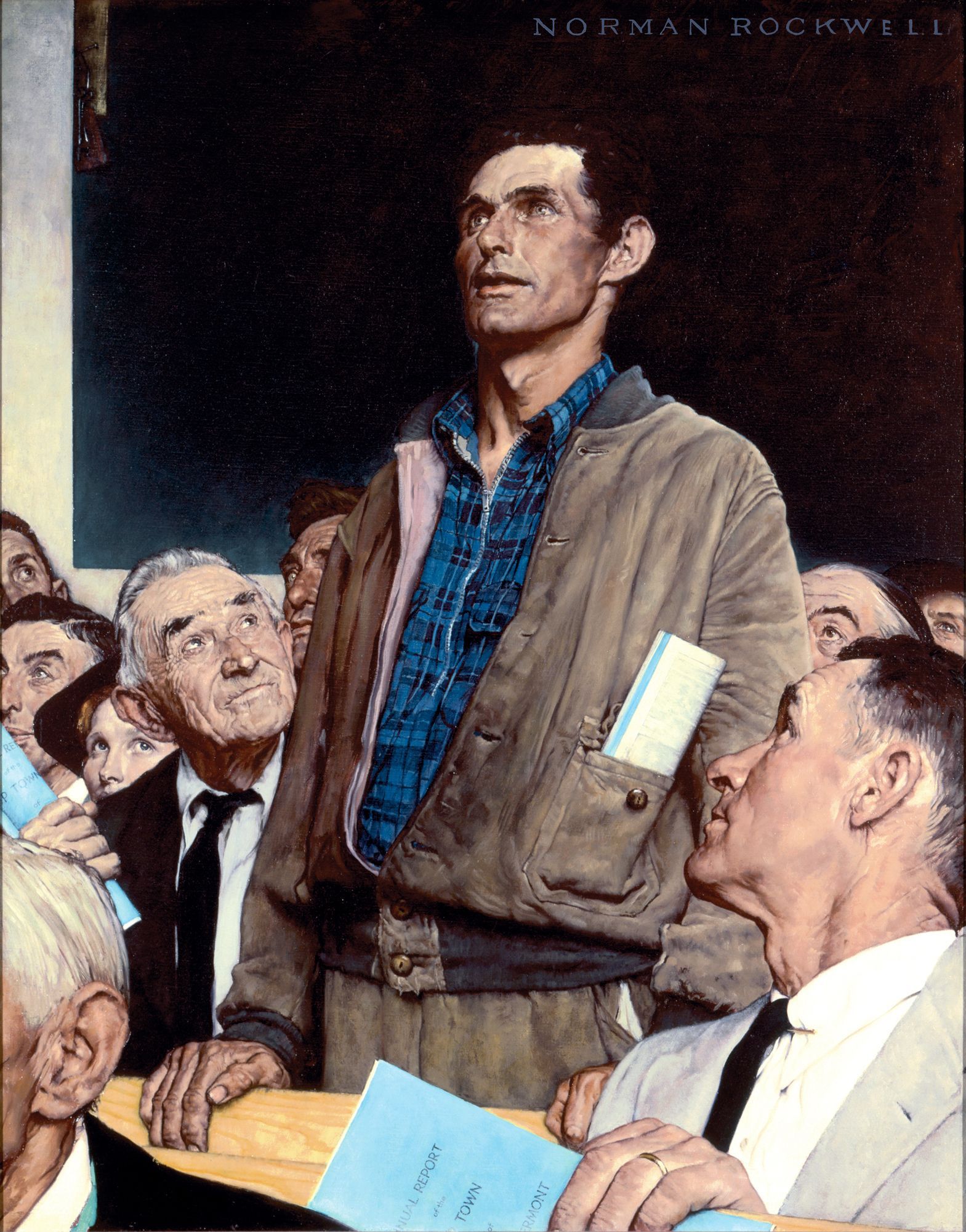
In the heart of New England, Vermont holds a tradition that vividly captures the essence of direct democracy—the Vermont Town Meeting. This annual event, deeply rooted in the state's history, serves not just as a local government meeting but as a vibrant testament to the community spirit and democratic participation that define Vermont. Norman Rockwell's iconic painting of a Vermont town meeting, "Freedom of Speech," immortalizes this democratic process, showcasing a lone individual standing among his neighbors, voicing his opinion with confidence and respect.
When is the Vermont Town Meeting This Year?
The Vermont Town Meeting is traditionally held on the first Tuesday of March. This year, the meetings are scheduled to take place on March 3rd with some towns meeting the night before. Be sure to check with your town for the time and location, Town meetings mark a continuation of a practice that has been upheld since the state's early days. These meetings offer a unique opportunity for residents to gather, discuss, and decide on local issues ranging from budget allocations to municipal policies, embodying the principle of governance by the people.
The History of Vermont Town Meetings
Vermont's town meeting tradition dates back to before its statehood, originating in the 18th century. It was a time when communities were smaller, and the town meeting served as the most practical form of government. This system allowed for community members to participate directly in the decision-making process, a stark contrast to the representative democracy seen in most other states and at the federal level.
Over the years, Vermont town meetings have evolved, but their core principles remain unchanged. They stand as a forum where citizens can directly influence their local government, deciding on everything from public spending to local laws. This form of direct democracy reinforces the accountability of elected officials and fosters a strong sense of community among participants.
Vermont Town Meetings Today
Despite the passage of time and the advent of modern technologies that have transformed how we communicate and govern, the majority of Vermont's towns continue to hold their annual meetings. In these gatherings, residents debate issues face-to-face, vote by a show of hands or by paper ballot, and take part in a tradition that has been described as the "purest form of democracy."
The importance of these meetings extends beyond local governance. They serve as a critical tool for education in civic responsibility, offering residents, especially the youth, a firsthand experience of democracy in action. The process encourages transparency, participation, and a deep sense of belonging to the community.
The Work of UVM Professor Frank Bryan:
The significance of Vermont's town meetings has been extensively studied by former University of Vermont Professor Frank Bryan, who dedicated much of his career to understanding and documenting this unique form of democracy. Bryan's work highlights how town meetings represent a fundamental aspect of Vermont's identity and serve as a model of civic engagement and direct democracy. His research underscores the effectiveness of town meetings in fostering discussion, facilitating local decision-making, and maintaining a vibrant community life.
Vermont Town Meetings are more than just annual gatherings; they are a living embodiment of direct democracy and a cornerstone of the state's cultural heritage. As we approach this year's meetings, we are reminded of the enduring value of community, the importance of civic participation, and the power of collective decision-making. In the spirit of Norman Rockwell's portrayal and inspired by the research of Professor Frank Bryan, Vermont continues to champion a tradition that ensures every voice is heard and every vote counts. For those of us committed to upholding the principles of democracy, Vermont's town meetings offer a beacon of hope and a model to aspire to.