How does a Right of First Refusal Work?

Vermont real estate right of first refusal

At its essence, the Right of First Refusal (ROFR) is a contractual agreement between a property owner and a potential buyer. This agreement allows the potential buyer the option to purchase the property before the owner sells it to someone else. In other words, if the owner decides to sell the property, the individual with the ROFR is given the "first shot" at the deal.


How Does ROFR Work?


Notification: When a property owner receives a valid offer from a third party, they must notify the holder of the ROFR, typically in writing, about the terms and conditions of the offer.


Decision Time: The ROFR holder usually has a specific time frame (stipulated in the agreement) to decide whether they will match the third party's offer.


Matching the Offer: If the ROFR holder chooses to match the offer, they step into the shoes of the third party, and the original transaction proceeds with the ROFR holder instead.


Declining the Offer: If the ROFR holder decides not to match the offer or fails to respond within the stipulated timeframe, the property owner is then free to sell or lease to the third party.


Real estate appraiser evaluating a Vermont home to determine its value for a home purchase.
September 2, 2026
Learn what a low Vermont home appraisal means for buyers and sellers, including financing, price negotiations, contingencies and closing options.
Peet Law Group Named Best Vermont Law Firm
August 5, 2026
Peet Law Group was named Best Vermont Law Firm in the 2026 Seven Daysies Awards for the fourth consecutive year. Thank you to our clients and industry partners.
What Closing Costs Do Vermont Home Sellers Pay?
August 5, 2026
Learn what closing costs Vermont home sellers typically pay, including real estate commissions, attorney fees, mortgage payoffs, taxes, and non-resident withholding.
Vermont Condominium
July 29, 2026
Learn what to review before closing on a Vermont condo purchase, including resale certificates, special assessments, association finances, insurance, rules, and more.
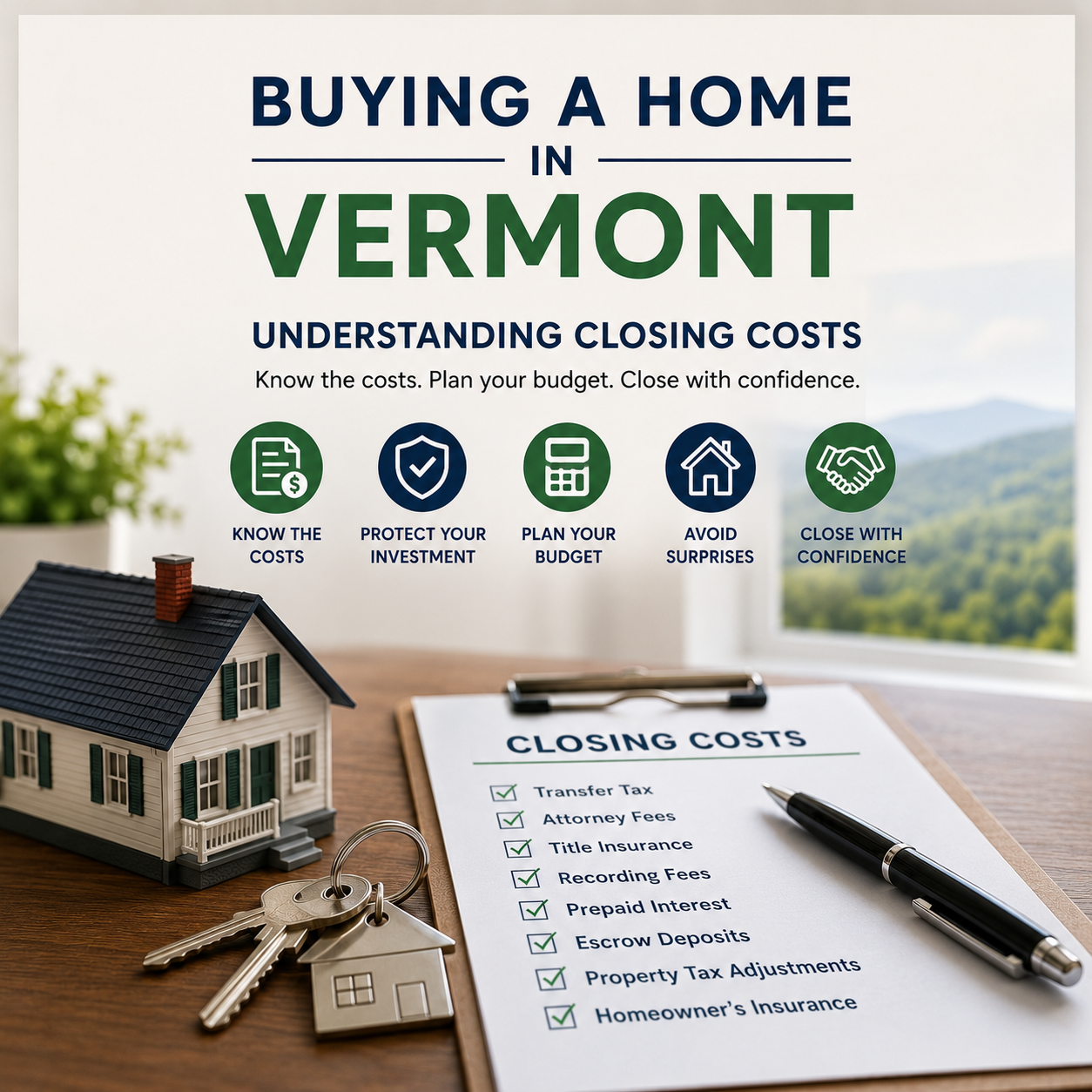
Vermont Home Buyer Closing Costs
By Fred Peet July 23, 2026
Learn what closing costs Vermont home buyers pay, including transfer tax, title insurance, attorney fees, lender costs, escrow deposits, and more.
Married Couples Should  Own Vermont Home as Tenants by the Entirety
July 16, 2026
Why Every Married Vermont Homeowner Should Understand Tenancy by the Entirety
July 8, 2026
Buying or Selling a Home in Vermont? Here's What Happens After the Contract Is Signed
Delaware Statutory Trust DST
July 1, 2026
A Delaware Statutory Trust Can Help You Defer Capital Gains Taxes While Transitioning From Active Property Management to Passive Real Estate Ownership
A surveyed vacant land parcel in Vermont with a property survey, marked building site, gravel drivew
June 15, 2026
Buying vacant land in Vermont? Learn about zoning, septic permits, Current Use, Act 250, wetlands, flood zones, financing, and other essential due diligence tips before you buy.
Common Vermont Title Issues and How They Are Resolved
June 10, 2026
Learn how Vermont attorneys resolve title defects, clear liens, address deed issues, and help buyers and sellers reach a successful closing.