What Every Vermont Vacant Land Buyer Should Know Before Signing a Purchase Contract
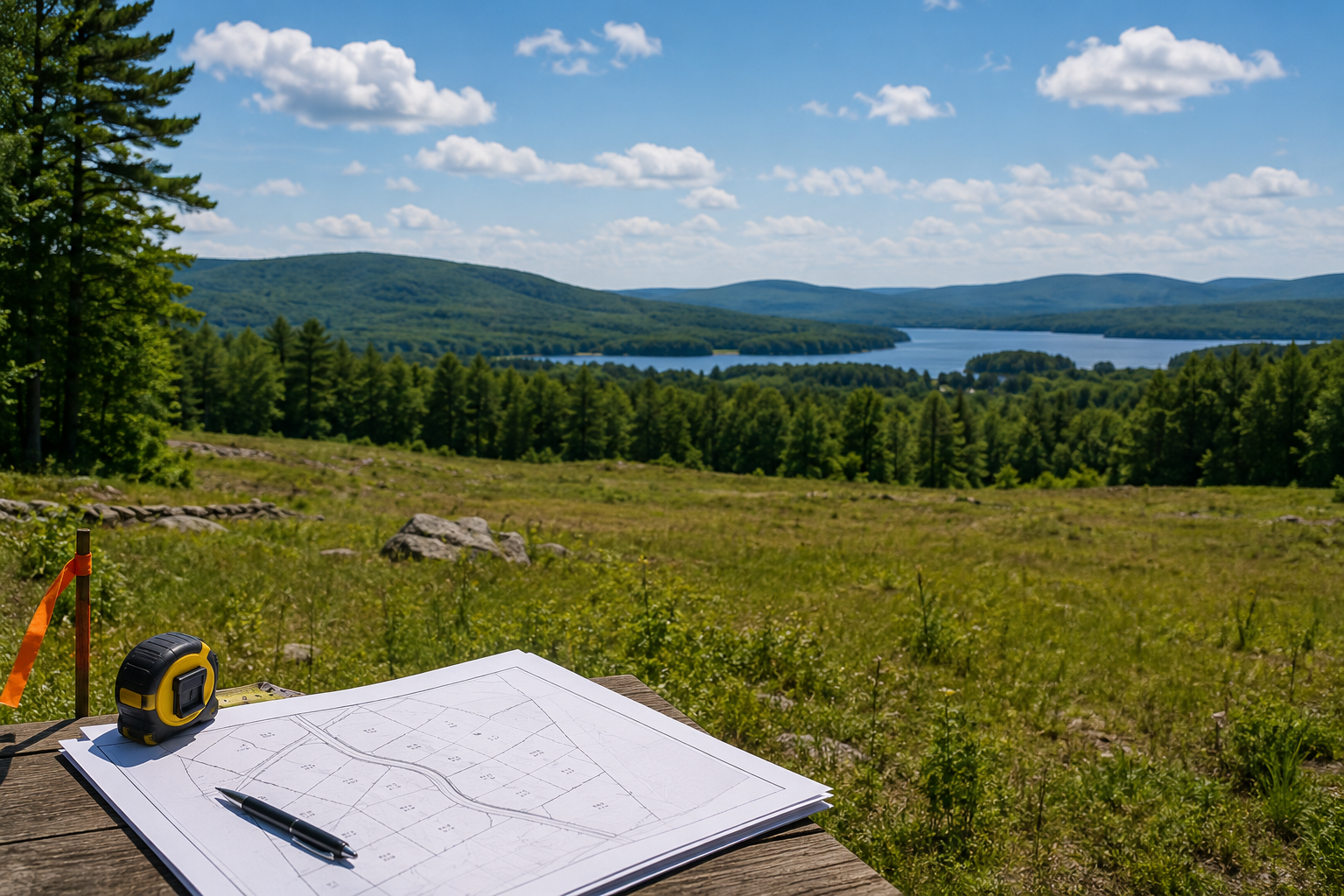
A scenic Vermont building lot at sunset featuring survey stakes, a rolled site plan on a large rock, a newly cleared homesite, and a gravel driveway overlooking rolling Green Mountains and a forested valley, illustrating the planning and due diligence involved in purchasing vacant land.

Buying vacant land in Vermont offers exciting possibilities. You may envision building your dream home, creating a family retreat, purchasing waterfront property, starting a farm, investing for the future, or simply enjoying recreational land for hiking, hunting, or maple sugaring.

Unlike purchasing an existing home, however, buying vacant land requires extensive planning and investigation. The value of a parcel depends not only on its beauty or location, but also on whether it can legally and practically be used for your intended purpose.

Many buyers make the mistake of assuming that because a parcel is advertised as a "building lot" or because neighboring properties have homes, they will automatically be able to build exactly what they want. Unfortunately, that assumption can lead to expensive surprises.

Questions involving zoning, wastewater permitting, wetlands, legal access, title issues, Current Use enrollment, restrictive covenants, environmental regulations, subdivision potential, and numerous other matters can dramatically affect a property's value and usefulness.

At Peet Law Group, we've represented buyers and sellers throughout Vermont in thousands of real estate transactions. We've seen firsthand how careful due diligence before signing a purchase contract can help buyers avoid costly mistakes and move forward with confidence.

This guide discusses many of the legal and practical issues that should be considered before purchasing vacant land in Vermont.

Why Buying Vacant Land Is Different From Buying an Existing Home

When purchasing an existing home, much of the uncertainty has already been resolved.

The home has likely been occupied for years. Utilities are connected. Water and wastewater systems are functioning. The driveway exists. The home generally complies with applicable zoning regulations. The property's use has already been established.

Vacant land is different.

With undeveloped property, you're not purchasing a finished product. You're purchasing the opportunity to create one.

Whether that opportunity becomes reality depends on many factors that should be investigated before the purchase becomes final.

A beautiful parcel may ultimately prove unsuitable because:

  • It cannot support a septic system.
  • Local zoning prohibits the intended use.
  • Wetlands significantly limit development.
  • Shoreland regulations restrict construction.
  • Legal access is inadequate.
  • Restrictive covenants prohibit further subdivision.
  • Significant portions of the property lie within setback areas.
  • Engineering costs are substantially higher than anticipated.
  • Future development triggers additional permitting requirements.

Many of these issues are not obvious during a casual walk across the property.

Start With One Simple Question

Every vacant land purchase should begin by answering one question:

What do you intend to do with the property?

The answer drives nearly every aspect of the due diligence process.

For example, someone purchasing recreational land may care primarily about access, hunting rights, timber value, and Current Use enrollment.

Someone planning to build a primary residence will likely focus on wastewater permits, water supply, zoning, setbacks, financing, utility availability, and construction costs.

An investor may be most interested in future subdivision potential, appreciation, and development opportunities.

Your intended use should determine what investigations are appropriate before closing.

The Purchase Contract May Be the Most Important Part of the Transaction

Many buyers think the closing is where the important legal work occurs.

In reality, one of the most important stages of a vacant land purchase often occurs before the purchase contract is signed.

Unlike the purchase of an existing home, vacant land frequently requires numerous investigations that cannot be completed overnight.

Engineering studies, soils testing, title review, zoning research, wetlands evaluations, surveys, financing approvals, and other investigations may take weeks or even months.

Without properly drafted contract contingencies, a buyer may become legally obligated to purchase property before determining whether it can actually be used as intended.

Attorney Tip

One of the best investments a land buyer can make is consulting a Vermont real estate attorney before signing the purchase contract. An attorney can often recommend due diligence contingencies tailored to the specific property and your intended use rather than relying solely on standard contract language.

Due Diligence Is More Than a Home Inspection

When purchasing an existing home, buyers often focus on the home inspection.

Vacant land due diligence is much broader.

Depending on the property, buyers may need to investigate:

  • Local zoning
  • Wastewater permitting
  • Potable water supply
  • Soils testing
  • Wetlands
  • Shoreland restrictions
  • Flood hazards
  • Current Use enrollment
  • Act 250
  • Easements
  • Restrictive covenants
  • Surveys
  • Legal access
  • Utilities
  • Road maintenance
  • Stormwater requirements
  • Title issues
  • Environmental concerns
  • Financing
  • Future subdivision potential

Every property presents a unique combination of issues.

Twenty Questions Every Vermont Land Buyer Should Ask

Before purchasing vacant land, consider asking questions such as:

  1. Can I legally use the property for my intended purpose?
  2. Does local zoning permit that use?
  3. Is there an existing Wastewater System and Potable Water Supply Permit?
  4. If not, can one reasonably be obtained?
  5. Will the property support an on-site septic system?
  6. Is there an adequate water supply?
  7. Is the property enrolled in Current Use?
  8. What happens if land must be withdrawn from Current Use?
  9. Does Act 250 apply now or could it apply because of my plans?
  10. Are wetlands present?
  11. Is the property subject to the Shoreland Protection Act?
  12. Does the property have legal access?
  13. Are utilities reasonably available?
  14. Are restrictive covenants recorded?
  15. Can the property be subdivided in the future?
  16. Is a survey advisable?
  17. Are there easements affecting development?
  18. Will stormwater permits be required?
  19. Can the purchase and future construction be financed?
  20. Does the title reveal any issues affecting ownership or development?

Each question deserves careful investigation.

Begin With Local Zoning

One of the first investigations should involve determining what local zoning regulations permit.

Every Vermont municipality has its own zoning regulations, and those regulations can differ dramatically from one town to another.

Buyers should determine:

  • Whether the intended use is permitted.
  • Whether the use requires conditional approval.
  • Minimum lot size requirements.
  • Minimum road frontage.
  • Maximum building height.
  • Density limitations.
  • Home occupation rules.
  • Agricultural exemptions.
  • Accessory dwelling unit regulations.
  • Commercial restrictions.

A parcel that appears ideal may not be suitable for your intended project if zoning restrictions prevent the proposed use.

Can Your Building Actually Fit?

Even if zoning allows your intended use, setback requirements may substantially reduce the buildable area.

Applicable setbacks may include:

  • Front yard setbacks
  • Rear yard setbacks
  • Side yard setbacks
  • Shoreline setbacks
  • Wetland buffers
  • Utility easements
  • Road rights-of-way

The combination of these restrictions can significantly reduce where a home, garage, driveway, or other improvements may be constructed.

Wastewater System and Potable Water Supply Permits

One of the most important questions for many Vermont land purchases is whether the property already has a valid Wastewater System and Potable Water Supply Permit.

If a permit exists, buyers should determine:

  • Whether it remains valid.
  • Whether construction has already occurred under the permit.
  • Whether the permit authorizes the buyer's proposed project.
  • Whether amendments will be required.
  • Whether any permit conditions affect future development.

A permit issued years ago may not necessarily accommodate the home design, driveway location, or future plans envisioned by the buyer.

What If No Permit Exists?

If no wastewater permit has been obtained, additional investigation may be necessary before determining whether the property can support development.

Depending upon the circumstances, buyers may wish to consult a qualified engineer regarding:

  • Test pits.
  • Soil characteristics.
  • Site limitations.
  • Suitable septic system locations.
  • Potable water supply.
  • Overall feasibility.

While many undeveloped parcels are suitable for construction, not all are.

The inability to obtain necessary wastewater approvals may substantially affect the property's value and intended use.

Attorney Tip

Do not assume that because neighboring properties have homes, your property can necessarily obtain the same approvals. Soil conditions, topography, setbacks, wetlands, and other site-specific factors may produce very different results.

Current Use Enrollment

Many larger Vermont parcels are enrolled in the Use Value Appraisal Program, commonly referred to as Current Use.

The program may substantially reduce annual property taxes by valuing qualifying agricultural and forest land based upon its current use rather than its fair market development value.

Current Use can provide significant tax savings, but buyers should understand how the program may affect future plans.

Questions worth asking include:

  • Is the property currently enrolled?
  • Will enrollment continue after closing?
  • Does the buyer intend to continue qualifying?
  • Will construction require withdrawing some or all of the property?
  • Could withdrawal trigger a Land Use Change Tax?
  • Can only a portion of the property be withdrawn while leaving the balance enrolled?

A buyer planning to build a home on Current Use property should understand the potential tax consequences before purchasing.

Can the Property Be Further Subdivided?

Even buyers planning to build only one home should consider whether the property could someday be subdivided.

Future subdivision potential may significantly affect long-term value and marketability.

Questions to investigate include:

  • Does zoning permit additional lots?
  • What are the minimum lot size requirements?
  • Is sufficient road frontage available?
  • Can each future lot obtain wastewater approval?
  • Are additional municipal approvals required?
  • Do restrictive covenants prohibit further subdivision?

The answer may not matter today, but it could become very important years from now if your plans change or future buyers view subdivision potential as a valuable asset.

Legal Access Matters More Than You May Think

Many Vermont properties are located on quiet country roads, private roads, or rights-of-way.

Before purchasing land, buyers should determine whether the property enjoys legally enforceable access.

Important questions include:

  • Is the property served by a public highway or a private road?
  • Is access established by deed?
  • Does a recorded easement exist?
  • Who is responsible for road maintenance?
  • Are maintenance costs shared?
  • Is access available year-round?
  • Will a driveway permit be required?

Owning beautiful land is of little value if legal or practical access becomes a problem.

In addition, buyers should understand that physical access and legal access are not always the same thing. A visible driveway or trail crossing neighboring land does not necessarily establish a legal right to use it.

Surveys and Boundary Issues

Many Vermont properties have never been surveyed using modern surveying standards.

Although a survey is not required for every transaction, buyers should consider whether one is appropriate.

A survey may help identify:

  • Boundary lines.
  • Property corners.
  • Encroachments.
  • Rights-of-way.
  • Easements.
  • Acreage discrepancies.
  • Fence line issues.
  • Potential boundary disputes.

Survey information often becomes particularly valuable before constructing improvements near property lines.

Wetlands Can Significantly Affect Development

Wetlands are an important natural resource throughout Vermont and are protected under state and, in some cases, federal law. While wetlands provide valuable environmental benefits, they can also affect where and how improvements may be constructed.

Not every wet area is a regulated wetland, and not every regulated wetland completely prohibits development. However, wetlands and their associated buffer zones may limit where buildings, driveways, septic systems, utilities, or other improvements may be located.

If wetlands are suspected, buyers should consider whether additional evaluation by a qualified wetlands professional is appropriate before purchasing the property.

Attorney Tip

A property can have ample acreage but very little usable building area if wetlands, setback requirements, steep slopes, and easements overlap. Always evaluate the property's buildable area, not just its total acreage.

Waterfront Property and Vermont's Shoreland Protection Act

Many buyers are drawn to Vermont's beautiful lakes, ponds, and rivers. Waterfront property often commands premium prices, but it also comes with additional regulations.

The Vermont Shoreland Protection Act generally regulates certain activities within protected shoreland areas adjacent to many lakes and ponds. Depending on the proposed project, restrictions may apply to clearing vegetation, grading, construction, and other land-disturbing activities.

If you are purchasing waterfront property, determine:

  • Whether the property is subject to the Shoreland Protection Act.
  • Whether permits or approvals may be required before construction.
  • Whether vegetation clearing is restricted.
  • Whether shoreline stabilization work requires approval.
  • Whether existing improvements comply with applicable regulations.

A waterfront lot may still be an excellent purchase, but buyers should understand these additional requirements before closing.

Is the Property Located in a Flood Hazard Area?

Many Vermont buyers are attracted to land near rivers, streams, lakes, and other scenic waterways. While these locations can offer beautiful views and recreational opportunities, they may also present additional challenges if all or part of the property is located within a designated flood hazard area.

Before purchasing vacant land, buyers should determine whether any portion of the property is located within a mapped flood zone or flood hazard area. Even if the proposed building site appears to be outside the floodplain, flood hazard areas may still affect access roads, driveways, utility installations, septic systems, or future expansion plans.

If a property is located within a flood hazard area, buyers should investigate questions such as:

  • Is the proposed building site located within the flood hazard area?
  • Will local zoning or flood hazard regulations restrict construction?
  • Will a flood hazard permit or additional approvals be required?
  • Can the home be constructed outside the floodplain?
  • Will the location of the septic system or well be affected?
  • Will a lender require flood insurance as a condition of financing?
  • How might flood hazards affect future resale value?

Even if development is permitted, building within or near a flood hazard area may increase construction costs. Elevation requirements, engineering, drainage improvements, and flood-resistant construction techniques may all become necessary depending on the property's location and the proposed project.

Flooding should also be considered from a practical perspective. Vermont has experienced several significant flooding events in recent years, reminding property owners that areas outside federally mapped flood zones may still experience localized flooding, erosion, or damage from severe weather. Reviewing historical flooding, local knowledge, topography, nearby streams, and drainage patterns can provide valuable insight beyond simply reviewing a flood map.

Attorney Tip

Don't assume that a property is free from flood-related concerns simply because it has never been developed. Before purchasing vacant land, consider reviewing applicable flood hazard maps, local flood hazard regulations, and any municipal records that may affect your intended use of the property. Understanding these issues before signing a purchase contract can help avoid unexpected construction costs, permitting delays, or financing challenges.

Will Act 250 Affect Your Plans?

Act 250 is one of Vermont's most well-known land use laws, but many buyers misunderstand when it applies.

Some buyers assume Act 250 applies to every property. Others assume it never applies to residential construction.

Neither assumption is correct.

Whether Act 250 applies depends upon numerous factors, including the property's history, previous development, location, ownership history, and the nature and scope of the proposed project.

For some buyers, Act 250 may have little or no effect.

For others, it may become one of the most significant regulatory considerations affecting future development.

Because the analysis can be fact-specific, buyers planning significant development should determine whether their proposed project could trigger Act 250 review or whether the property is already subject to an existing permit.

Restrictive Covenants Can Limit Future Use

Many parcels are subject to restrictive covenants recorded in prior deeds.

These private restrictions can sometimes be more limiting than zoning regulations.

Examples include restrictions on:

  • Further subdivision.
  • Commercial activities.
  • Mobile homes.
  • Livestock.
  • Architectural standards.
  • Minimum home size.
  • Short-term rentals.
  • Additional structures.

A title examination should identify recorded covenants affecting the property, allowing buyers to determine whether those restrictions are compatible with their intended use.

Easements May Affect More Than Access

Many buyers think only about driveway easements.

However, easements may grant others rights to:

  • Cross the property.
  • Install utility lines.
  • Access neighboring land.
  • Maintain drainage systems.
  • Use recreational trails.

Likewise, your property may benefit from easements across neighboring land.

Understanding these rights before closing is an important part of due diligence.

Don't Overlook Title Examination and Title Insurance

A title search does much more than confirm ownership.

A thorough title examination may identify issues such as:

  • Easements.
  • Rights-of-way.
  • Restrictive covenants.
  • Boundary agreements.
  • Mortgages.
  • Judgment liens.
  • Estate interests.
  • Probate issues.
  • Errors in prior deeds.
  • Outstanding ownership claims.

Even after a careful title search, title insurance provides valuable protection against certain covered title defects that may not be discovered until after closing.

For most buyers, title insurance is a relatively small investment compared to the value of the property being purchased.

Utility Availability

Beautiful rural property may not have readily available utilities.

Before purchasing, buyers should investigate:

  • Electrical service.
  • Internet availability.
  • Cellular coverage.
  • Public water.
  • Public sewer.
  • Natural gas availability.
  • Propane options.

Extending utility service over long distances can significantly increase development costs.

Stormwater Requirements

Many buyers focus only on the house they plan to build.

However, construction often creates impervious surfaces such as roofs, driveways, parking areas, patios, and walkways.

Depending upon the scope of development and applicable regulations, stormwater permitting or stormwater management systems may become necessary.

These requirements should be considered during the planning stage because they may affect project costs, site design, and construction schedules.

Timber and Clearing Restrictions

Many Vermont properties contain valuable timber.

Before purchasing wooded property, buyers should determine:

  • Whether timber rights have previously been conveyed.
  • Whether a forestry management plan exists.
  • Whether the property is enrolled in Current Use as forest land.
  • Whether timber harvesting restrictions apply.

Buyers should also understand that Vermont regulates certain timber harvesting activities. Depending on the size and nature of the proposed harvest, including clear-cutting, state laws and regulations may apply.

If your plans include extensive clearing for development, farming, or other purposes, be sure to understand any applicable requirements before work begins.

Environmental Concerns

Although many vacant parcels present no environmental concerns, buyers should remain alert for issues such as:

  • Former dump sites.
  • Underground fuel tanks.
  • Agricultural contamination.
  • Hazardous materials.
  • Flood hazards.
  • Erosion concerns.
  • Steep slopes.
  • Former industrial uses.

Environmental issues may increase development costs or affect future use of the property.

Construction Financing Is Different

Many first-time land buyers assume financing construction will be similar to obtaining a conventional mortgage on an existing home.

Construction financing is often quite different.

Lenders may require:

  • Larger down payments.
  • Construction plans and specifications.
  • Builder approval.
  • Cost estimates.
  • Draw schedules.
  • Periodic inspections before releasing funds.
  • Conversion to permanent financing upon project completion.

Vacant land loans may also have higher interest rates and different underwriting standards than traditional residential mortgages.

Before purchasing land, buyers should speak with prospective lenders to understand financing requirements for both the land purchase and future construction.

Think Beyond Today's Plans

Even if you have no current intention of subdividing the property or selling it in the near future, consider how future buyers may view the land.

Questions worth asking include:

  • Could additional lots be created?
  • Will financing be available for future buyers?
  • Will title insurance present any unusual issues?
  • Are utilities sufficient for future development?
  • Will zoning likely support future uses?

Thinking ahead may help preserve both flexibility and value.

Common Mistakes Buyers Make

Some of the most common mistakes include:

  • Assuming a property is buildable because neighboring lots contain homes.
  • Failing to investigate zoning before signing a contract.
  • Assuming an old wastewater permit satisfies future plans.
  • Overlooking Current Use tax consequences.
  • Ignoring restrictive covenants.
  • Assuming visible access is legal access.
  • Not obtaining title insurance.
  • Underestimating engineering and site development costs.
  • Waiting until shortly before closing to consult an attorney.
  • Using a purchase contract that does not adequately protect the buyer during the due diligence period.

Many of these mistakes can be avoided through careful planning before the purchase contract becomes binding.

Should I hire an attorney before signing a purchase contract?

For many vacant land purchases, involving a Vermont real estate attorney before signing the purchase contract allows potential issues to be identified while there is still an opportunity to negotiate appropriate contract protections.

The Value of Early Legal Guidance

Buying vacant land often involves far more uncertainty than purchasing an existing home. A beautiful parcel may ultimately require significant engineering, permitting, environmental review, or regulatory approvals before it can be developed as intended.

Many of the most important protections available to a buyer must be negotiated before the purchase contract is signed. Once a buyer becomes legally obligated to purchase the property, options for addressing unexpected issues may be significantly more limited.

At Peet Law Group, we encourage buyers to involve a Vermont real estate attorney early in the process. Depending on the transaction, we can assist with reviewing and negotiating purchase contracts, recommending appropriate due diligence contingencies, coordinating title examinations and title insurance, and helping buyers understand legal issues that may affect their plans for the property.

Whether you're purchasing a residential building lot, recreational land, waterfront property, farmland, timberland, or investment property, careful planning before closing can help you make informed decisions and reduce the risk of costly surprises.

If you're considering purchasing vacant land anywhere in Vermont, the attorneys at Peet Law Group would be pleased to help guide you through the process from contract review through closing.


Common Vermont Title Issues and How They Are Resolved
June 10, 2026
Learn how Vermont attorneys resolve title defects, clear liens, address deed issues, and help buyers and sellers reach a successful closing.
Making a Home Purchase Offer in Vermont: Key Terms, Contingencies, and Legal Considerations
June 4, 2026
Making a Home Purchase Offer in Vermont: Key Terms, Contingencies, and Legal Considerations
Top 20 Vermont Title Search Issues
By Fred Peet May 20, 2026
Common Title Search Surprises We Have Found After Thousands of Vermont Title Searches
Vermont first time home buyer signing legal documents
May 12, 2026
Essential Legal Services Every First-Time Home Buyer in Vermont Should Understand
Careers at Peet Law Group: Join Vermont’s Leading Real Estate Law Firm
By Fred Peet May 7, 2026
Why Work at Peet Law Group? Career Opportunities at a Leading Vermont Real Estate Law Firm
Vermont Title Insurance
April 15, 2026
Buying or selling real estate in Vermont involves more than agreeing on a price. One of the most important but often misunderstood protections is title insurance. Many buyers ask whether it is truly necessary. The short answer is that while Vermont law does not require title insurance, it is often a smart and valuable safeguard. What Is Title Insurance? Title insurance is a policy that protects property owners and lenders against financial loss due to defects in the title. A title defect is any issue that could affect ownership rights, such as unknown liens, unpaid taxes, errors in public records, undisclosed heirs, boundary disputes, or forged documents. Unlike other types of insurance, title insurance protects against past problems, not future events. Is Title Insurance Required in Vermont? No, Vermont law does not require buyers to purchase title insurance. However, most lenders will require a lender’s title insurance policy if you are financing the purchase. An owner’s policy is optional, but strongly recommended. If you are paying cash, no one will require title insurance, but that does not eliminate the underlying risks. What Does a Title Search Do? Before issuing a policy, a real estate attorney performs a title search by reviewing land records to confirm that the seller has clear ownership. While this process is thorough, it is not foolproof. Some issues cannot be discovered through a title search alone, including hidden defects in the chain of title, clerical recording mistakes, fraud, forgery, or missing heirs. Title insurance provides protection against these risks even after the closing. Owner’s Policy vs Lender’s Policy Understanding the difference is important. A lender’s title insurance policy is required by most mortgage lenders and protects only the lender’s financial interest in the property. It does not protect the buyer. An owner’s title insurance policy is optional but protects your equity and ownership rights for as long as you own the property. Without an owner’s policy, you could be responsible for legal fees or financial losses if a title issue arises. Why Title Insurance Matters in Vermont Vermont’s real estate landscape makes title insurance especially important. Many properties have long ownership histories that go back generations. Boundary lines may be based on old surveys or informal agreements. Rights of way and shared access roads are common, and some easements may be unrecorded or poorly documented. These factors increase the likelihood of title issues that may not be immediately obvious at the time of purchase. What Does Title Insurance Cost? Title insurance is typically a one-time premium paid at closing. The cost varies based on the purchase price but is relatively small compared to the protection it provides. There are no ongoing premiums. What Happens If You Do Not Have Title Insurance? If a title issue arises after closing and you do not have an owner’s policy, you may face legal costs to defend your ownership, loss of part of your property rights, or financial loss if another party has a valid claim. In some cases, ownership itself could be at risk. When Might You Consider Skipping It? Some buyers consider skipping title insurance when purchasing property from a close family member or when the property has a very recent and well-documented title history. Even in these situations, risks can still exist, and legal advice is important before deciding to go without coverage. The Bottom Line While title insurance is not required in Vermont, it is one of the most effective ways to protect your investment in real estate. For most buyers, especially those unfamiliar with the property’s history, an owner’s policy provides peace of mind and financial protection that far outweighs the cost. How Peet Law Group Can Help Peet Law Group guides buyers and sellers through every stage of the Vermont real estate process. This includes conducting thorough title searches, identifying and resolving title issues, advising on title insurance coverage, and handling closings efficiently and accurately. With offices in Williston and White River Junction, the firm focuses exclusively on Vermont real estate law and provides practical, experienced guidance tailored to each transaction. Frequently Asked Questions Do I need title insurance if I am paying cash? No, but it is still strongly recommended to protect your ownership rights. Does title insurance cover boundary disputes? It may cover certain disputes depending on the policy and circumstances. Is title insurance a one-time cost? Yes, it is paid once at closing and lasts as long as you own the property. Can title issues really happen after a closing? Yes. Some problems, such as fraud or undiscovered heirs, may only surface later. If you are buying or selling property in Vermont and have questions about title insurance, working with an experienced real estate attorney can help you avoid costly mistakes and protect your investment.
Peet Law Group named Best Real Estate Law Firm in Vermont by readers of Vermont Business Magazine
April 9, 2026
The Peet Law Group is proud to announce that it has once again been recognized as the Best Real Estate Law Firm in Vermont by Vermont Business Magazine’s prestigious Best of Business (BOB) Awards. This honor marks another consecutive win for the firm, continuing an unbroken streak that began in 2019. A Trusted Leader in Vermont Real Estate Law The BOB Awards are determined by the votes of Vermont business professionals, making this recognition especially meaningful. It reflects the confidence that clients, lenders, real estate professionals, and industry peers place in Peet Law Group year after year. Peet Law Group is dedicated exclusively to Vermont real estate law, providing comprehensive legal services across the entire state. The firm represents: • Buyers and sellers in residential and commercial transactions • Lenders and financial institutions • Real estate investors and developers • Property owners With offices in Williston and Hartford (White River Junction), the firm handles transactions and legal matters throughout Vermont, offering deep local knowledge combined with efficient, responsive service. Commitment to Excellence and Client Service Since its founding, Peet Law Group has built a reputation for: • Precision and attention to detail in real estate transactions • Clear communication and practical legal guidance • Reliable and timely closings • Strong relationships with Vermont’s real estate community Winning the BOB Award consecutively since 2019 highlights the firm’s continued commitment to delivering high-quality legal services in an ever-changing real estate landscape. Thank You to Our Clients and Partners This recognition would not be possible without the continued support of our clients and professional partners. We extend our sincere gratitude to: • Home buyers and sellers who trust us with important life decisions • Lenders and banks who rely on our experience and consistency • Realtors, brokers, and title professionals who collaborate with us every day Your confidence and partnership drive everything we do. Looking Ahead Peet Law Group is honored by this recognition and views it as both a milestone and a responsibility. We are proud of what we have accomplished and re-dedicated to supporting our clients with the same high level of service, responsiveness, and expertise that earned this award. As Vermont’s real estate market continues to evolve, Peet Law Group remains committed to being a trusted legal partner for clients across the state.
Vermont Boundary Line Agreements
March 27, 2026
Boundary issues are one of the most common and costly problems affecting Vermont real estate. Whether it is an old stone wall, a misplaced fence, or conflicting surveys, uncertainty about property lines can delay sales, create disputes, and reduce property value. A boundary line confirmation agreement is one of the most effective legal tools available to resolve these issues permanently. What Is a Boundary Line Confirmation Agreement? A boundary line confirmation agreement is a written legal agreement between neighboring property owners that establishes the exact location of a shared boundary line. Instead of litigating or continuing uncertainty, the parties agree: • Where the boundary line is located • That the agreed line is binding on both properties • That the agreement will be recorded in the land records Once recorded, the agreement becomes part of the chain of title for both properties. When Do You Need Boundary Line Agreement? Boundary line confirmation agreements are commonly used in Vermont when: • Two surveys show conflicting boundary lines • A fence, driveway, or structure crosses a property line • Old deeds contain vague or inconsistent descriptions • A stone wall or natural feature has been treated as the boundary for many years • A buyer or title company raises a boundary concern before closing These situations are especially common with older rural properties, where descriptions may rely on outdated landmarks. Why Not Just Rely on a Survey? A survey is important, but it does not always solve the problem. A surveyor provides an opinion of where the boundary is located based on available evidence. However: • Different surveys may reach different conclusions • Historical use of land may conflict with surveyed lines • Title companies may still require resolution before insuring A boundary line confirmation agreement resolves the issue legally and permanently, rather than leaving it open to interpretation. How the Process Works in Vermont 1. Identify the Issue The parties, often with their attorneys, identify the uncertainty or dispute. 2. Obtain a Survey (if needed) A licensed surveyor may be hired to map the boundary and provide a clear reference. 3. Negotiate the Boundary Line The neighbors agree on a specific boundary location, sometimes as a compromise. 4. Obtain permits if the boundary line is being moved If a boundary line is being moved as part of a compromise rather than confirming an existing line, municipal and state permits may be required. 5. Draft the Agreement A Vermont real estate attorney prepares a formal agreement describing the boundary. 6. Sign and Record The agreement is signed by all parties and recorded in the town land records. Key Legal Benefits A properly drafted and recorded boundary line confirmation agreement can: • Prevent future disputes between neighbors • Satisfy title insurance requirements • Allow a real estate transaction to proceed • Clarify ownership for future buyers • Avoid costly litigation In many cases, this is a far more efficient and cost-effective solution than going to court. Important Considerations It Must Be Precise The agreement should include: • A clear legal description • Reference to a survey or plan • Language binding future owners Lender Approval May Be Required If there is a mortgage on the property, lender consent may be necessary. It Should Be Recorded Unrecorded agreements may not protect against future claims. It Is Not the Same as Adverse Possession While related, this is a voluntary agreement, not a legal claim based on long-term use. Common Vermont Scenarios Boundary line agreements are frequently used in situations like: • A neighbor’s driveway crosses onto your land • A barn or shed encroaches over the line • Lakefront properties with unclear lot divisions • Wooded land where boundaries were never clearly marked Why This Matters for Buyers and Sellers If you are buying or selling property in Vermont, unresolved boundary issues can: • Delay closing • Create financing problems • Lead to post-closing disputes Addressing the issue with a boundary line confirmation agreement before closing can save significant time, money, and stress. Boundary line confirmation agreements are a practical and effective way to resolve uncertainty and protect property rights in Vermont. Given the age and rural nature of many properties in the state, these agreements are often essential to ensure clear and marketable title. If you are facing a boundary issue or your transaction has raised concerns, working with an experienced Vermont real estate attorney can help you reach a clear and lasting solution.
March 22, 2026
Buying a home or property in Vermont is an exciting process, but not every transaction makes it to the closing table. National data shows that roughly 7% to 14% of home purchase agreements fail before closing, depending on market conditions. In some months, that is nearly 1 out of every 7 real estate transactions falling apart. The good news is that many of these failed deals are preventable. If you are under contract to purchase property in Vermont, here are practical steps you can take to keep your transaction on track. Protect Your Financing From Day One Financing issues are one of the leading causes of failed real estate transactions. Even after pre-approval, your lender will continue reviewing your financial situation right up until closing. To avoid problems: • Do not quit or change jobs during the transaction • Avoid taking on new debt such as car loans or credit cards • Do not make large purchases • Make all payments on time to protect your credit score A last-minute change in your financial profile can result in a loan denial just days before closing. Respond Quickly to Your Lender Mortgage underwriting moves quickly and requires detailed documentation. Delays often happen because buyers do not respond fast enough. To stay on track: • Submit requested documents promptly • Monitor your email and voicemail daily • Provide complete and accurate information A slow response can delay closing or cause financing deadlines to be missed. Be Reasonable About Inspection Issues Home inspections frequently uncover issues, especially with older Vermont properties. How you respond matters. Instead of expecting a perfect property: • Focus on significant defects rather than minor cosmetic concerns • Be open to repair credits or negotiated solutions • Understand that compromise is often necessary Transactions commonly fall apart when parties take inflexible positions after inspections. Stay on Schedule for Your Closing Date Your purchase contract includes important deadlines, including the closing date. Missing deadlines can create serious consequences. To stay organized: • Track contingency deadlines carefully • Coordinate regularly with your lender, attorney, and agent • Be prepared with funds for closing Failure to close on time can put your deposit at risk or allow the seller to cancel the agreement. Engage a Vermont Real Estate Attorney Early One of the most effective ways to prevent a transaction from falling apart is to involve a real estate attorney early in the process. An experienced Vermont attorney will: • Conduct the title search promptly • Identify title defects, liens, or other issues • Resolve problems before they delay closing Waiting too long to address title issues can leave insufficient time to fix them. Identify and Resolve Title Issues Early Title problems are a common but often overlooked cause of failed transactions. These may include: • Unknown liens or unpaid property taxes • Boundary disputes or encroachments • Errors in prior deeds Addressing these issues early allows time for resolution and avoids last-minute surprises. Avoid Last-Minute Changes Consistency is critical once you are under contract. Avoid making changes such as: • Switching lenders • Changing how you will take title • Making unexplained large deposits These changes can trigger delays or additional scrutiny that jeopardizes closing. Plan Ahead for Insurance and Closing Logistics Seemingly small details can delay a closing if overlooked. Make sure you: • Secure homeowner’s insurance in advance • Arrange for utility transfers • Provide any required documentation to your lender • Verifying with your bank or financial institution in advance how your funds can be transferred quickly and safely to the closing attorney. Missing documentation can delay funding and push back your closing date. Communicate Clearly With Your Team A Vermont real estate transaction involves multiple parties working together. Miscommunication is a frequent cause of delays. Stay proactive by: • Asking questions early • Confirming deadlines • Keeping your attorney, lender and Realtor informed of any issues Clear communication helps prevent small problems from escalating. Work With Experienced Vermont Professionals Local experience matters, especially in Vermont where properties often involve unique issues such as rights-of-way, rural access, or older title histories. Loan officers, Realtors and attorneys located in Vermont will know local laws and customs allowing for a smooth transaction. Working with knowledgeable Vermont professionals can significantly reduce the risk of your transaction falling apart. The Bottom Line A significant percentage of real estate transactions nationwide fail before closing, but most of these failures are preventable. By protecting your financing, staying responsive, being flexible during inspections, and addressing legal issues early, you can dramatically improve your chances of reaching a successful closing. Need Help Keeping Your Vermont Real Estate Transaction on Track? Peet Law Group assists buyers throughout Vermont with title searches, resolving legal issues, and guiding transactions from contract to closing. Engaging experienced legal counsel early in the process can help prevent delays, avoid surprises, and ensure your purchase reaches the closing table.
FinCEN Residential Real Estate Reporting Rule in Vermont
March 11, 2026
Beginning March 1, 2026, new federal anti–money laundering regulations issued by the Financial Crimes Enforcement Network (FinCEN) will require reporting of certain residential real estate transactions. These rules are commonly referred to as the FinCEN Residential Real Estate Reporting Rule. The rule is designed to combat money laundering and illicit financial activity in the real estate market by requiring disclosure of the beneficial owners behind certain property purchases made without institutional financing. For buyers, sellers, and real estate professionals in Vermont, these requirements may add a new step to the closing process. At Peet Law Group, we are helping clients understand how the rule works and how to avoid delays at closing. When the FinCEN Reporting Rule Applies A report will generally be required when all three of the following conditions are present. 1. The Property Is Residential Real Estate The rule applies to most residential property types, including: • 1–4 family homes • Condominiums • Cooperative units • Vacant land intended for residential development Commercial real estate transactions are not covered by this rule. 2. The Buyer Is a Legal Entity or Trust Reporting requirements apply when the buyer is not an individual but instead a legal entity or trust. Examples include: • Limited Liability Companies (LLCs) • Corporations • Partnerships • Trusts These structures are commonly used for investment or liability protection purposes. The new rule requires disclosure of the beneficial owners behind these entities when certain transactions occur. 3. The Purchase Has No Institutional Financing The rule primarily targets all-cash purchases. A transaction will likely trigger reporting if there is no loan from a traditional bank or mortgage lender. Transactions may still be considered “non-financed” under the rule even if there is: • Private financing • Hard-money loans • Seller financing Because these arrangements do not involve a regulated financial institution performing anti-money-laundering checks, FinCEN requires the closing professional to report the transaction. What Information Must Be Reported When a transaction triggers the rule, information about the beneficial owners of the purchasing entity must be reported to FinCEN. Beneficial ownership information generally includes identifying details about the individuals who ultimately own or control the entity purchasing the property. Seller information required for reporting is relatively limited, but sellers should still be prepared to provide basic identifying details to the closing agent if the rule applies. This information must be gathered before closing so that the required report can be submitted to FinCEN. Who Is Responsible for Filing the Report In most Vermont real estate transactions, the closing attorney will be responsible for preparing and submitting the FinCEN report. However, both the buyer and seller must cooperate in providing the required information. Without timely disclosure, the closing process could be delayed. Because of this, real estate agents should notify their clients early in the transaction if the purchase may trigger FinCEN reporting. Contract Language and Timing Considerations To avoid last-minute problems, it is advisable for purchase contracts to include a provision requiring both parties to provide the necessary FinCEN information to the closing agent at least two business days before closing. Including this requirement in the contract helps ensure that: • The closing attorney has sufficient time to prepare the report • The transaction is not delayed at the closing table • Both parties understand their obligations under federal law Real estate professionals may wish to incorporate a FinCEN reporting addendum into their purchase and sale agreements. How the Rule Affects Vermont Real Estate Transactions Many Vermont transactions will not trigger reporting under the rule. For example, purchases by individuals using a conventional mortgage will typically fall outside the requirements. However, reporting is more likely in transactions involving: • Investment properties purchased through LLCs • Cash purchases of vacation homes or second homes • Purchases of residential development land through entities or trusts Given the prevalence of LLC ownership in real estate investment, it is important for buyers and sellers to understand whether the rule applies before they reach the closing stage. Guidance for Buyers, Sellers, and Realtors If you are involved in a residential transaction where the buyer is an entity and there is no traditional financing, it is wise to address FinCEN reporting early in the process. Buyers should be prepared to disclose beneficial ownership information. Sellers should be aware that the transaction may involve additional federal reporting requirements. Working with an experienced real estate attorney can help ensure compliance with the new rule while keeping the transaction moving smoothly. Vermont Real Estate Closing Attorneys Peet Law Group assists buyers, sellers, and real estate professionals throughout Vermont with residential and commercial closings. Our attorneys monitor new regulatory developments such as the FinCEN Residential Real Estate Reporting Rule and help clients navigate the additional requirements. If you have questions about how the new FinCEN reporting rule may affect your transaction, contact Peet Law Group to discuss your upcoming closing .