House Damaged Before Closing in Vermont? Know Your Legal Rights
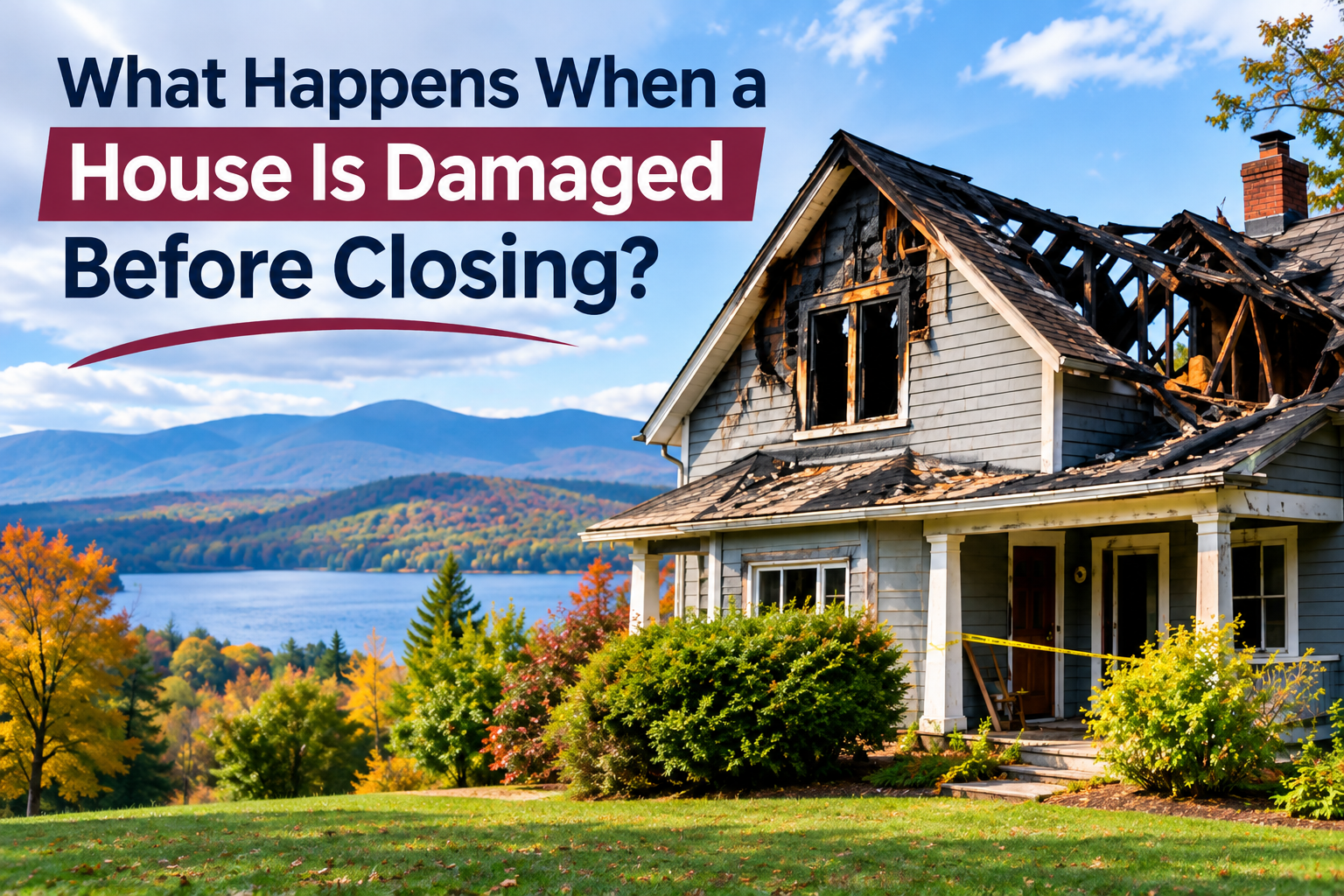
Buying or selling a home is an exciting process, but what happens if the property is damaged after the purchase and sale contract is signed and before the closing takes place? A house fire, flooding, severe storm, or even a burst water pipe can create unexpected complications for both buyers and sellers.
Fortunately, the standard Vermont REALTORS® Purchase and Sale Contract addresses this situation and provides important protections for homebuyers.
At Peet Law Group, our Vermont real estate attorneys help buyers and sellers navigate unexpected problems that arise before closing. We've even represented a buyer whose prospective home burned down after the purchase and sale contract was signed.
Understanding your rights and responsibilities before a problem occurs can help protect your interests and avoid costly disputes.
Who Is Responsible if a Vermont Home Is Damaged Before Closing?
The Vermont REALTORS® Purchase and Sale Contract, titled "Risk of Loss/Insurance," addresses responsibility for property damage between the contract date and closing.
Under this provision, the seller bears the risk of loss until ownership transfers to the buyer. The seller must also maintain the existing fire and extended coverage insurance on the buildings and improvements.
If the property is damaged or destroyed and has not been restored to its previous condition by the scheduled closing date, the buyer generally has two options:
- Proceed with the purchase and receive the benefit of insurance proceeds recovered because of the damage.
- Terminate the purchase and sale contract and receive a refund of all contract deposits as the buyer's sole remedy.
Importantly, the choice belongs to the buyer. The seller cannot simply require the buyer to accept a price reduction or an insurance settlement instead of exercising the contractual right to terminate.
These protections apply to the language in the contract reviewed here. Not every Vermont real estate transaction uses the same form, and amendments or additional contract provisions may change the parties' rights.
What Types of Property Damage Can Occur Before Closing?
Damage can happen at any point between signing a contract and transferring ownership. Common examples include:
- Fire damage: A kitchen fire, electrical fire, or other incident damages or destroys the home.
- Flooding: Heavy rain, overflowing rivers, or groundwater causes flooding and structural damage.
- Wind and storm damage: High winds damage the roof, siding, windows, or other portions of the property.
- Fallen trees: A tree falls onto the house, garage, or another structure.
- Frozen or burst pipes: Plumbing freezes during Vermont's winter months, causing extensive water damage.
- Vandalism: Someone intentionally damages the home while it is under contract.
- Other accidental damage: A water heater leaks, a ceiling collapses, or another unexpected event damages the property.
The contract does not establish a minimum dollar amount of damage required before its protections may apply. Even relatively minor damage that remains unrepaired at closing could potentially trigger the buyer's contractual options, although disputes may arise over whether the provision applies to a particular situation.
A Real Example: A Vermont Home Burns Down Before Closing
At Peet Law Group, we represented a buyer who had signed a purchase and sale contract to purchase a Vermont home. Before the closing could take place, the house burned down.
Our client understandably no longer wanted to purchase the property.
Under the risk-of-loss provision of the purchase and sale contract, the buyer terminated the agreement and received a full refund of the contract deposit. The seller did not dispute the termination or return of the deposit.
This situation illustrates why the risk-of-loss provision is so important. Without appropriate contractual protections, unexpected damage could create significant financial and legal complications for someone purchasing a home.
What if the Seller Wants to Repair the Damage Before Closing?
When damage occurs, the seller may offer to make repairs and restore the property before the scheduled closing.
However, the Realtor form contract does not expressly require the seller to repair every instance of damage. Instead, it addresses the buyer's options when damaged buildings or improvements have not been restored to their prior condition by closing.
If repairs cannot be completed before the scheduled closing date, the buyer is not automatically obligated to extend the closing to give the seller additional time.
The parties may nevertheless agree to postpone closing while repairs are completed.
Disagreements can also arise over whether repairs adequately restored the property. For example, a burst pipe might cause water damage that is repaired cosmetically, but the buyer may remain concerned about hidden moisture, mold, or damage behind walls.
In these circumstances, additional inspections, contractor reports, or negotiations may be necessary.
Can the Buyer and Seller Negotiate a Different Solution?
Yes. Although the contract establishes specific contractual options, buyers and sellers can mutually agree to a different arrangement.
Depending on the circumstances, possible solutions include extending the closing date to allow repairs, reducing the purchase price, providing a closing credit, or establishing an escrow arrangement to pay for repairs after closing.
Any negotiated solution should be carefully documented in a written agreement signed by both parties.
If the buyer is obtaining mortgage financing, the lender may also need to approve the arrangement. Mortgage lenders can impose requirements concerning property condition, insurance, repairs, closing credits, and repair escrows.
What Happens if Insurance Does Not Cover the Damage?
Insurance can complicate an already difficult situation.
Although the Realtor form contract allows the buyer to proceed with the purchase and receive the benefit of insurance proceeds, several problems can arise.
The insurance company might deny the claim, coverage limits might be insufficient to pay for repairs, or the claim might remain unsettled when closing is scheduled.
Additionally, the seller's mortgage lender may have rights concerning insurance proceeds.
For these reasons, buyers should consult their attorney before agreeing to close on a damaged property in exchange for insurance benefits. The contractual language does not guarantee that sufficient insurance money will be available to complete repairs.
Sellers should maintain the insurance coverage required by their purchase and sale contract until title transfers. Sellers who move out before closing should also check with their insurance company because vacancy can affect coverage.
Buyers should arrange for their own homeowner's insurance to become effective when they acquire ownership.
Why the Final Walkthrough Before Closing Is So Important
At Peet Law Group, we strongly recommend that every homebuyer conduct a final walkthrough shortly before closing.
A property that was in excellent condition during the original home inspection may have experienced damage in the weeks or months since.
The standard Vermont REALTORS® Purchase and Sale Contract provides for the buyer to inspect the property within 24 hours before closing to verify compliance with the contract's possession requirements.
During the final walkthrough, buyers should look for new water damage, plumbing leaks, broken windows, storm damage, missing fixtures, and other changes in the property's condition.
If damage is discovered, the buyer should immediately notify their closing attorney.
The attorney can evaluate the contract, communicate with the seller's attorney, and determine whether repairs, negotiations, or termination may be appropriate.
Buyers should not simply refuse to attend closing without properly exercising their contractual rights. The contract contains specific written notice requirements that should be followed when terminating the contract.
What if Damage Is Discovered After Closing?
The timing of the damage matters.
Under the contract, the seller bears the risk of loss between the contract date and the transfer of title. Once ownership transfers, the buyer generally assumes the risk of subsequent physical damage.
If damage occurred before closing but was discovered afterward, the situation may be more complicated. The buyer's rights could depend on the contract, when the damage occurred, whether the seller knew about it, and whether relevant information was concealed or misrepresented.
Damage that already existed when the purchase and sale contract was signed may also be governed by different provisions, including inspection contingencies and applicable disclosure requirements.
This is another reason why a thorough final walkthrough is so important.
What Should Vermont Home Sellers Do if Damage Occurs Before Closing?
Sellers who discover damage while their property is under contract should act promptly.
They should document the damage, contact their insurance company, notify the buyer and real estate agents, and consult their attorney.
Sellers should also avoid making assumptions about whether repairs will be sufficient or whether the buyer must proceed with the purchase.
Early communication and cooperation can often help the parties reach a practical resolution without unnecessary conflict.
Protecting Your Interests in a Vermont Real Estate Transaction
Unexpected property damage can turn an otherwise routine real estate closing into a complicated legal matter.
Whether the damage involves a minor plumbing leak or a catastrophic house fire, understanding the purchase and sale contract is essential.
At Peet Law Group, our experienced Vermont real estate attorneys represent buyers and sellers throughout Vermont. We help clients understand their contractual rights, address problems that arise before closing, and work toward practical solutions.
With offices in Williston and White River Junction, Vermont, Peet Law Group is available to assist with your next Vermont real estate purchase or sale.
Visit www.peetlaw.com to learn more about our Vermont real estate legal services or contact our office for assistance.