
The Step-by-Step Guide to Buying Your First Home: Professionals You Need and When to Contact Them

Buying a home for the first time is an exciting but complex process. With so many steps involved, it’s essential to understand the process and know which professionals to rely on at each stage. This guide walks you through the key steps and introduces you to the Professionals who will help make your home purchase smooth and successful.
Who to Contact: Mortgage Lender or Broker
A mortgage lender or broker helps you determine how much home you can afford and pre-approves you for a loan. A pre-approval letter strengthens your offer when you find a home. It’s wise to shop around for the best interest rates and loan terms.
When to Contact: Before you start looking at homes.
Who to Contact: Buyer’s Real Estate Agent
A real estate agent helps you find homes within your budget, schedules showings, negotiates on your behalf, and guides you through the entire purchase process.
When to Contact: After you receive mortgage pre-approval.
Once you find a home you love, your agent will help you craft a competitive offer. If the seller accepts, the home will go under contract, leading to the next steps.
Who to Contact: Real Estate Attorney
In Vermont, hiring a real estate attorney is crucial. Your attorney will review contracts, negotiate terms, conduct a title search, and oversee the closing process to ensure everything is legally sound.
When to Contact: As soon as your offer is accepted.
Who to Contact: Home Inspector
A home inspector assesses the property’s condition, identifying potential issues with the foundation, roof, electrical systems, plumbing, and more. If significant problems are found, the contract inspection contingency may allow you to renegotiate the price, request repairs or terminate the contract.
When to Contact: Immediately after your offer is accepted.
Who to Contact: Mortgage Lender & Appraiser
Your lender will order an appraisal to confirm the home’s value aligns with the loan amount. Finalizing your mortgage involves submitting an application and documents and meeting lender requirements.
When to Contact: Shortly after your offer is accepted.
Who to Contact: Insurance Agent
Most lenders require homeowners insurance before closing. This protects your home from risks like fire, theft, and natural disasters.
When to Contact: Before closing, but start shopping early.
Before closing, you’ll walk through the home to ensure everything is in the agreed-upon condition and any negotiated repairs have been completed.
Who to Contact: Real Estate Attorney, Title Company, and Mortgage Lender
At closing, you’ll sign all necessary documents, pay closing costs, and officially take ownership of your new home.
When to Contact: Your attorney and lender will schedule closing once all requirements are met.
Final Thoughts
Buying your first home involves multiple steps and requires working with various professionals to ensure a smooth transaction. By understanding the role or each professional and when to contact them, you can navigate the process with confidence. If you’re considering buying a home in Vermont, working with an experienced real estate attorney can help protect your investment and ensure a seamless closing process.
Must Vermont home sellers disclose ghosts, murders, deaths, or hidden defects? Learn what Vermont real estate disclosure laws require before selling a home.
Learn what a real estate attorney costs in Vermont for a home purchase, sale or refinance, including current Peet Law Group flat-fee pricing.

Selling a Vermont home with a mortgage? Learn how your mortgage is paid off at closing, how payoff statements and discharges work, and what happens if an old mortgage appears in the land records.

Learn when a Vermont seller may cancel a home sale and what can happen if a seller refuses to close.

Learn what a low Vermont home appraisal means for buyers and sellers, including financing, price negotiations, contingencies and closing options.

Peet Law Group was named Best Vermont Law Firm in the 2026 Seven Daysies Awards for the fourth consecutive year. Thank you to our clients and industry partners.

Learn what closing costs Vermont home sellers typically pay, including real estate commissions, attorney fees, mortgage payoffs, taxes, and non-resident withholding.

Learn what to review before closing on a Vermont condo purchase, including resale certificates, special assessments, association finances, insurance, rules, and more.
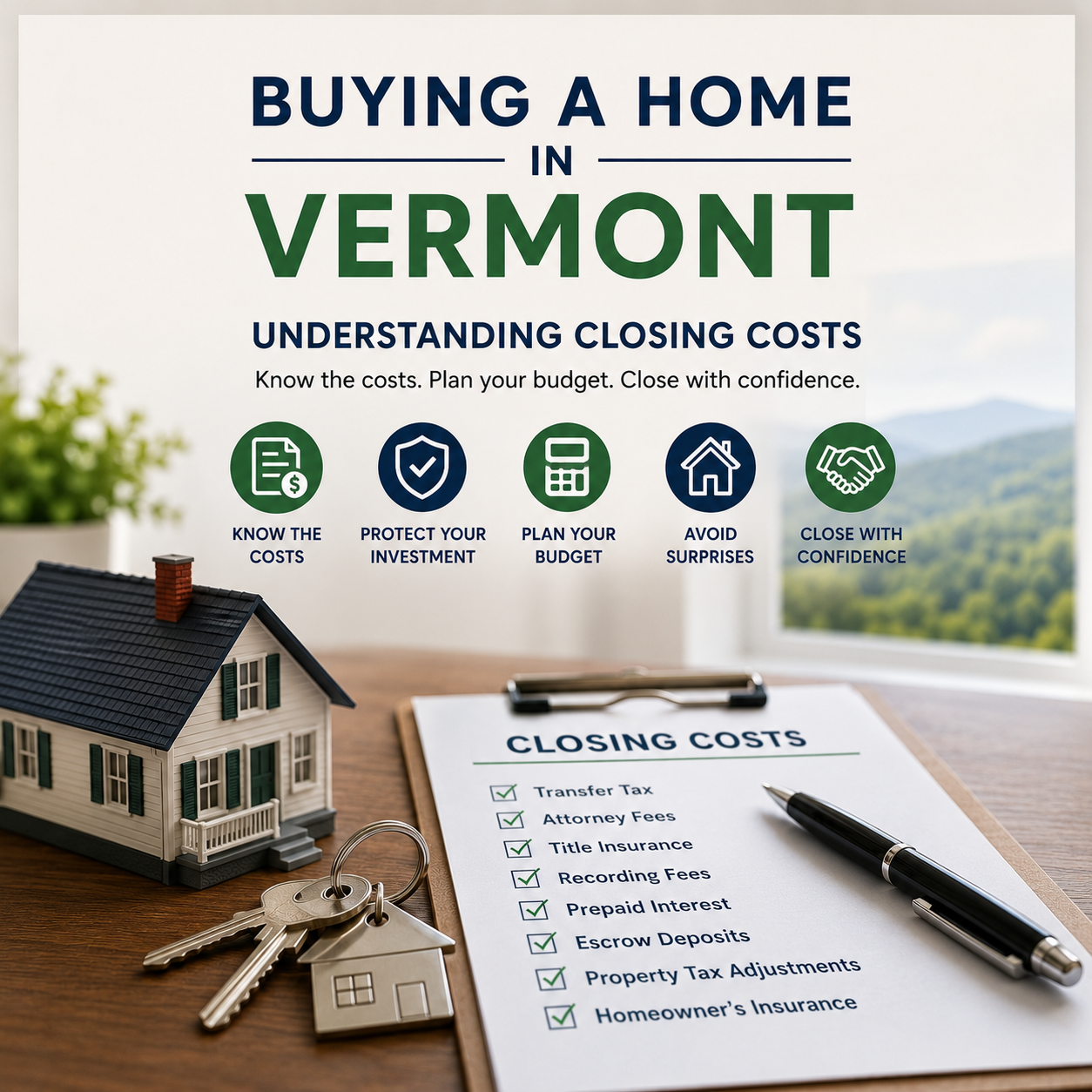
Learn what closing costs Vermont home buyers pay, including transfer tax, title insurance, attorney fees, lender costs, escrow deposits, and more.

Why Every Married Vermont Homeowner Should Understand Tenancy by the Entirety