
Property Surveys in Vermont: What Buyers and Sellers Should Know
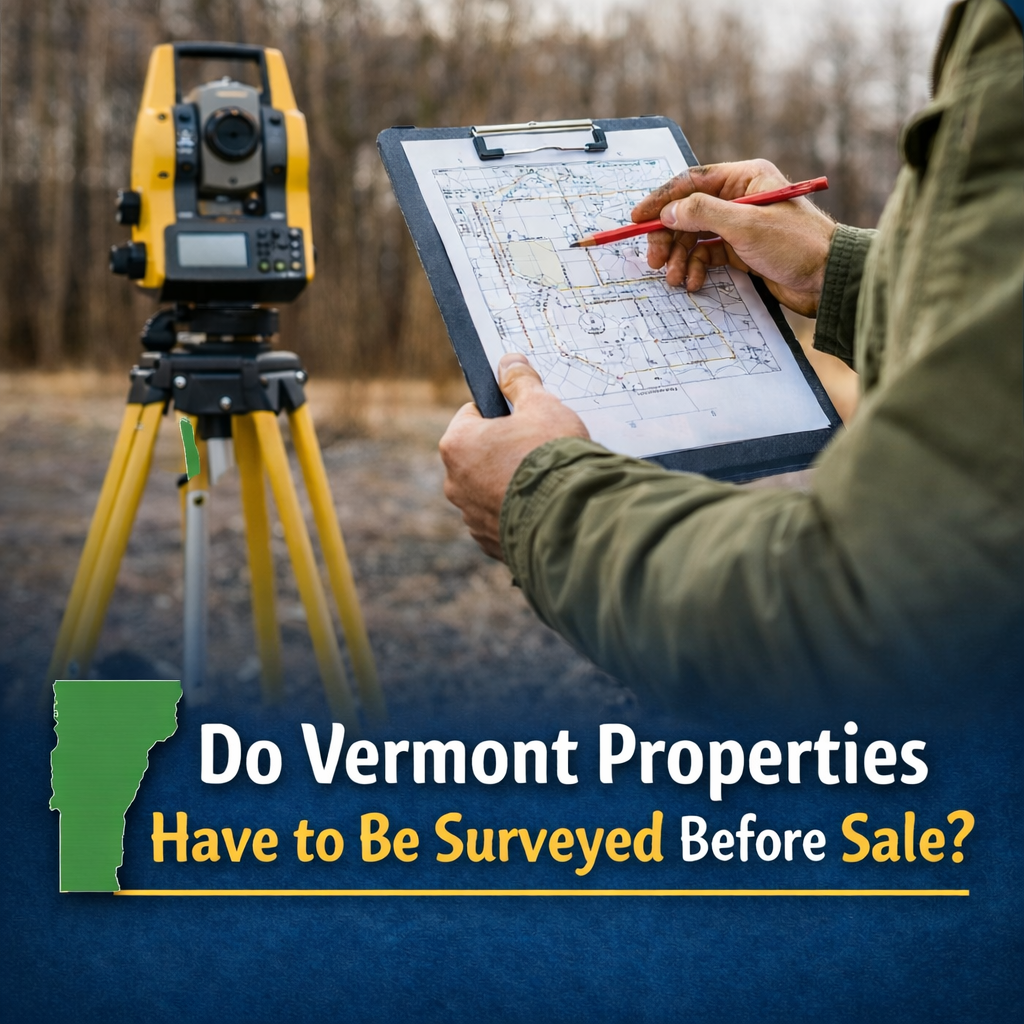
One of the common questions Vermont homebuyers and sellers ask during a real estate transaction is whether a property must be surveyed before it can be sold. The short answer is no. Vermont law does not require a property survey before a sale. That said, the lack of a survey can create legal and financial risks that buyers and sellers should understand before closing.
No General Survey Requirement Under Vermont Law
Unlike some states, Vermont does not have a statute that requires a property survey as a condition of sale. Many Vermont properties change hands without a new survey, particularly older homes, rural properties, and transactions where the parties are familiar with the land.However, the absence of a legal requirement does not mean a survey is unnecessary or unimportant. In many transactions, a survey plays a critical role in confirming what is actually being conveyed.
Even though Vermont law does not mandate a survey, one may still be required by other parties involved in the transaction.
Lenders sometimes require a survey, particularly when boundary issues, acreage, or improvements near property lines could affect the collateral. Title insurance companies may also require a survey, or may exclude coverage for boundary or encroachment issues if no survey is provided.
Municipal approvals, subdivisions, or recent boundary adjustments almost always require a survey, and the survey may need to be recorded in the land records before closing.
There are many situations in which a Vermont real estate attorney will strongly recommend a survey even if no one formally requires it.
If the property has never been surveyed, or if the most recent survey is very old, a new survey can help avoid disputes. This is especially true in Vermont, where property descriptions may rely on stone walls, trees, or historic landmarks that no longer exist.
Surveys are also important when fences, driveways, buildings, or septic systems appear close to boundary lines. Encroachments are common in Vermont and are often discovered only after closing if no survey is obtained.
Waterfront property, large acreage, undeveloped land, and properties with shared driveways or rights of way are also strong candidates for a survey. In these cases, understanding the exact boundaries and access rights can be essential to the buyer’s intended use of the property.
A survey helps confirm that the legal description in the deed matches the land on the ground. Without a survey, buyers often rely on assumptions that may not be accurate.
From a legal standpoint, surveys also interact with title insurance. If no survey is provided, the title insurance policy may exclude coverage for matters that would have been disclosed by a survey. That means the buyer may be assuming risk without realizing it.
Yes. Buyers frequently waive surveys, particularly in competitive markets. However, doing so should be a conscious decision made with an understanding of the potential consequences.
A Vermont real estate attorney can help a buyer evaluate whether waiving a survey is reasonable based on the property type, history, and intended use. What may be acceptable for a small residential lot in a subdivision may be risky for rural land or property with complex boundaries.
Determining whether a survey is needed is not a one size fits all decision. A Vermont real estate attorney reviews the deed, title history, municipal records, and transaction details to identify risks that a survey could address.
In some cases, an attorney may recommend obtaining an existing recorded survey rather than commissioning a new one. In others, a new survey may be the best way to protect the client’s interests before closing.
Vermont properties do not have to be surveyed before sale, but that does not mean a survey is unnecessary. Surveys play an important role in identifying boundary issues, protecting buyers, and reducing legal risk.
If you are buying or selling property in Vermont and have questions about surveys, title issues, or closing requirements, working with an experienced Vermont real estate attorney can help ensure the transaction proceeds smoothly and with fewer surprises.
Learn what a real estate attorney costs in Vermont for a home purchase, sale or refinance, including current Peet Law Group flat-fee pricing.

Selling a Vermont home with a mortgage? Learn how your mortgage is paid off at closing, how payoff statements and discharges work, and what happens if an old mortgage appears in the land records.

Learn when a Vermont seller may cancel a home sale and what can happen if a seller refuses to close.

Learn what a low Vermont home appraisal means for buyers and sellers, including financing, price negotiations, contingencies and closing options.

Peet Law Group was named Best Vermont Law Firm in the 2026 Seven Daysies Awards for the fourth consecutive year. Thank you to our clients and industry partners.

Learn what closing costs Vermont home sellers typically pay, including real estate commissions, attorney fees, mortgage payoffs, taxes, and non-resident withholding.

Learn what to review before closing on a Vermont condo purchase, including resale certificates, special assessments, association finances, insurance, rules, and more.

Learn what closing costs Vermont home buyers pay, including transfer tax, title insurance, attorney fees, lender costs, escrow deposits, and more.

Why Every Married Vermont Homeowner Should Understand Tenancy by the Entirety

Buying or Selling a Home in Vermont? Here's What Happens After the Contract Is Signed